Alpha Latest release v0.2.1
A GitOps-governed fleet manager for OpenTelemetry Collectors, built on OpAMP
Myriarch is an open-source OpAMP server that rolls out collector configurations and versions in waves, on hosts, in containers and on Kubernetes. Git sets the frame, the UI operates within it, and every action is audited.
What the OpAMP Supervisor leaves open
Collectors run under the upstream OpAMP Supervisor. The Supervisor manages configuration, health and restarts, but it cannot replace the collector binary, so fleets end up with many collector versions and hand-made update procedures. Myriarch is an OpAMP server for such a fleet. It renders one configuration per collector from Git, rolls configurations and versions out in waves with approvals and rollback, and starts version updates through an executor of your choice, such as the host agent myriarch-updater, a webhook or an AWX job.
Upgrade the collector on many hosts
Fleet management for OpenTelemetry Collectors
Built for operators who run many OpenTelemetry Collectors at edge sites, in data centers, in the cloud and on Kubernetes. It is designed for around 1,000 collectors, with headroom up to 5,000 (design targets, not measured limits), and is open source under the Apache-2.0 license.
A GitOps frame, operated from the UI
Blueprints, fleets, rollout policies and the allowed collector versions live in Git. The UI chooses within that frame, and every action is audited.
Manage many collectors with GitWave rollouts with approvals and rollback
Canary groups, percentage steps, approvals, health gates, failure thresholds, pause, abort, rollback and maintenance windows in the local time zone of each site.
RolloutsBinary updates on Linux, Windows and containers
The host agent myriarch-updater replaces the collector binary, or a webhook or AWX call hands the update to your own tooling. Linux hosts and container mode are beta, Windows hosts are experimental.
Roll out a collector versionInventory and health
Every collector with its version, health, effective configuration, components and host attributes, updated live.
AgentsKubernetes and one-command hosts
Signed OCI Helm charts run the server and, with the unchanged upstream images, the collectors. The server renders one installation command for Linux and Windows hosts. The server chart is beta, the collector chart is experimental.
Kubernetes on kindRelease tracking and notifications
New upstream releases are detected, breaking changes are extracted from the changelogs, outdated collectors are flagged, and notifications go to Teams, Slack or a webhook.
Track releases and notifySigned artifacts
The updater verifies the Sigstore bundle of a collector package before it installs it, offline if needed. The project's own releases, release candidates included, are signed keyless with Sigstore and carry build provenance.
Verify releasesHigh availability on PostgreSQL
Run several replicas of the server on one PostgreSQL database. State, events and the leader election for singleton jobs live there.
High availability
How it works with the Supervisor and the Collector
Collectors keep running under the upstream OpAMP Supervisor. myriarchd manages their configuration over OpAMP, and an exchangeable executor changes the collector binary, which the Supervisor cannot do.
The web UI
One interface for every installation, in a light and a dark appearance.
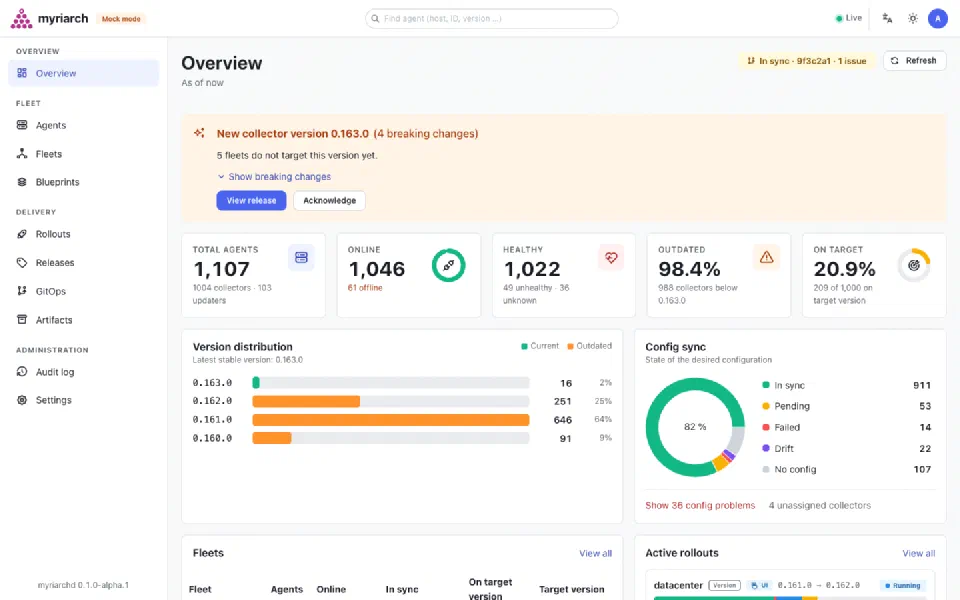
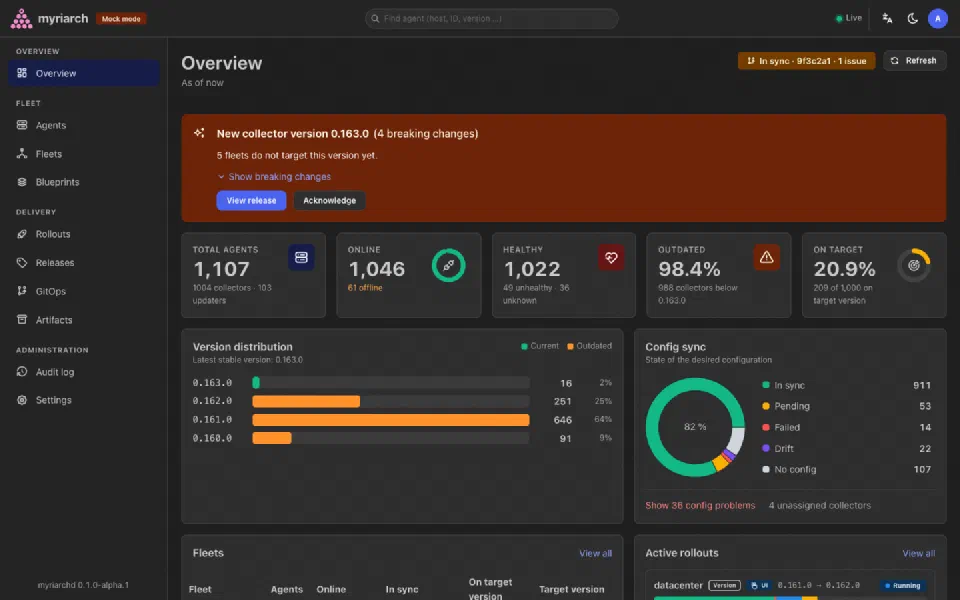
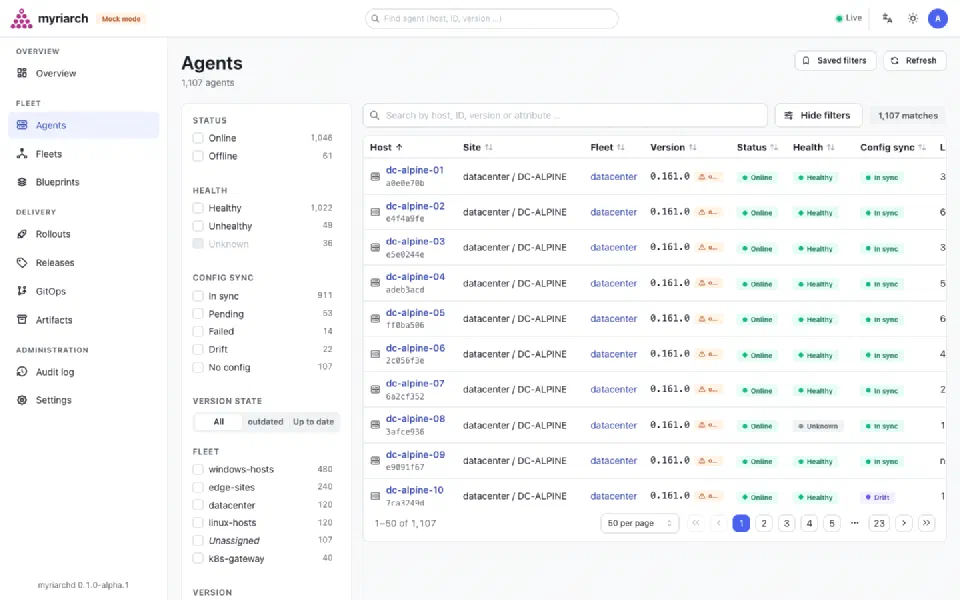
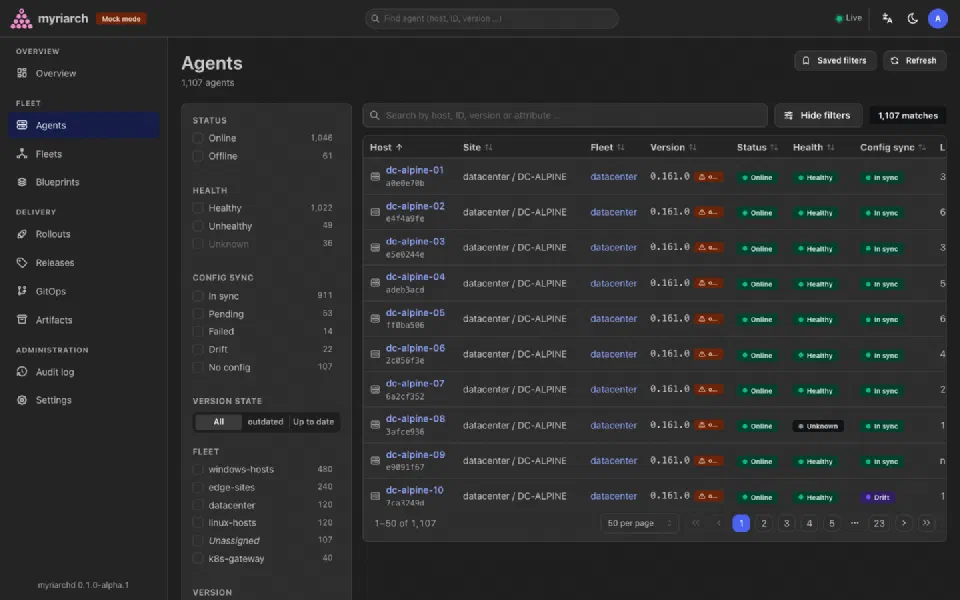
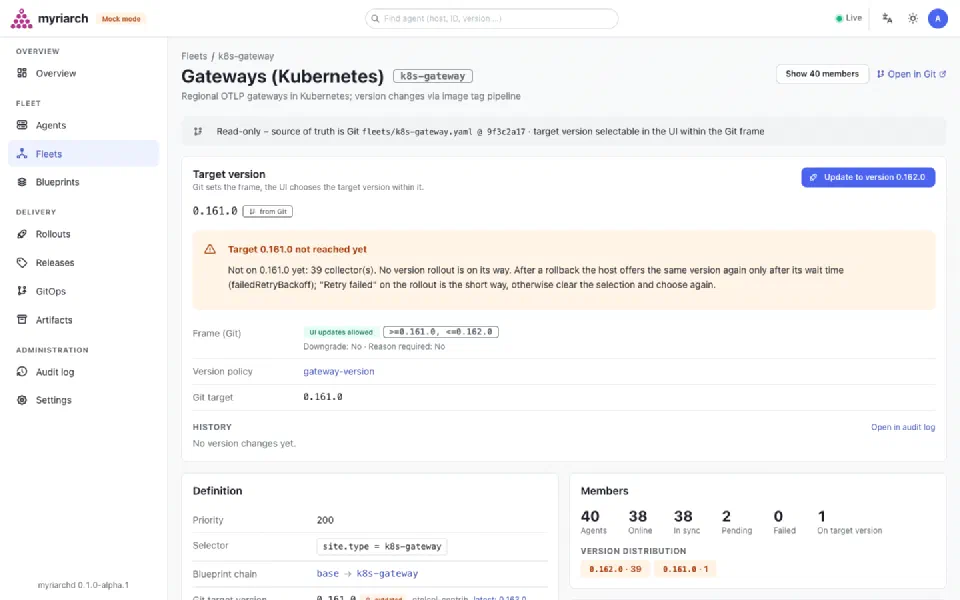
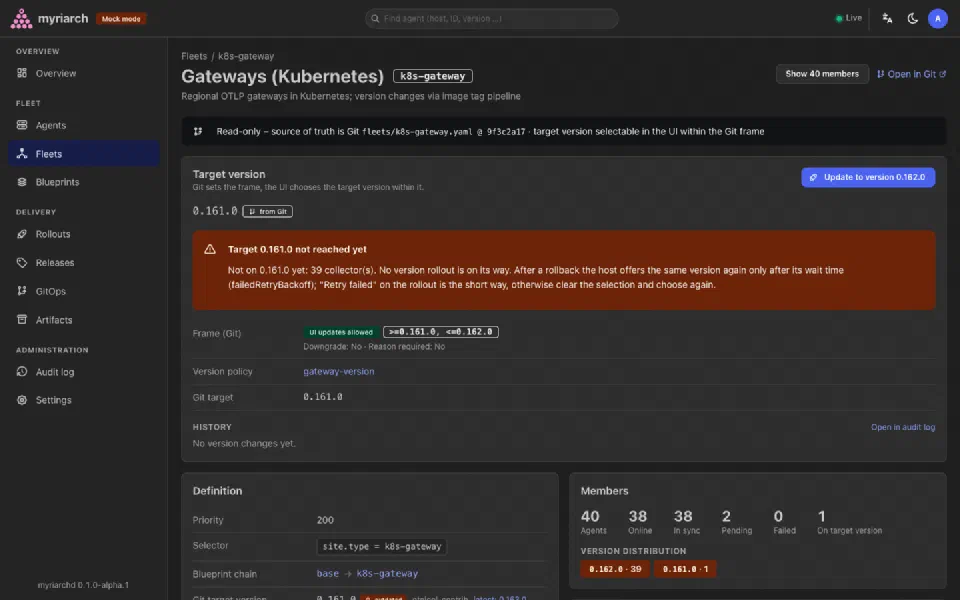
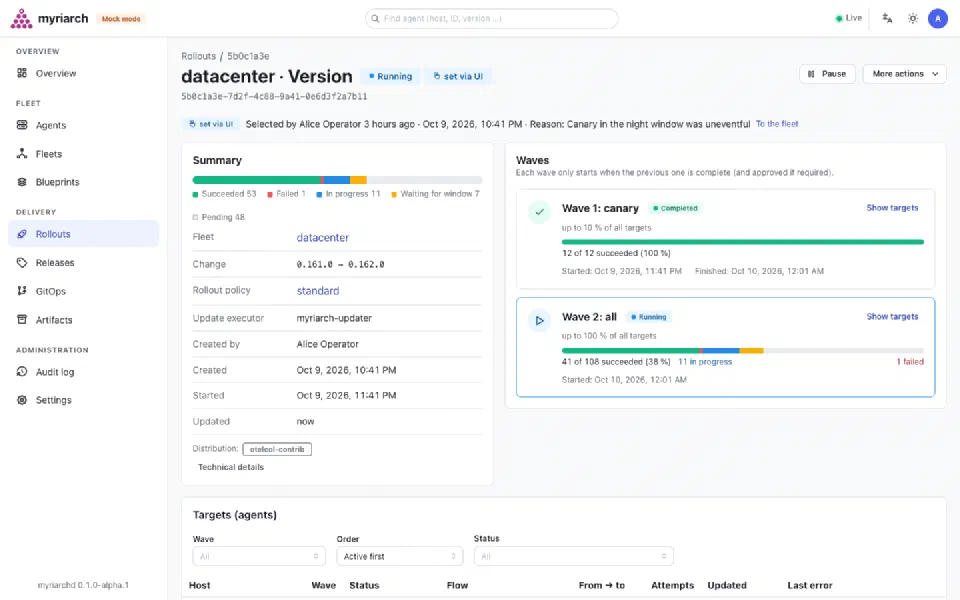
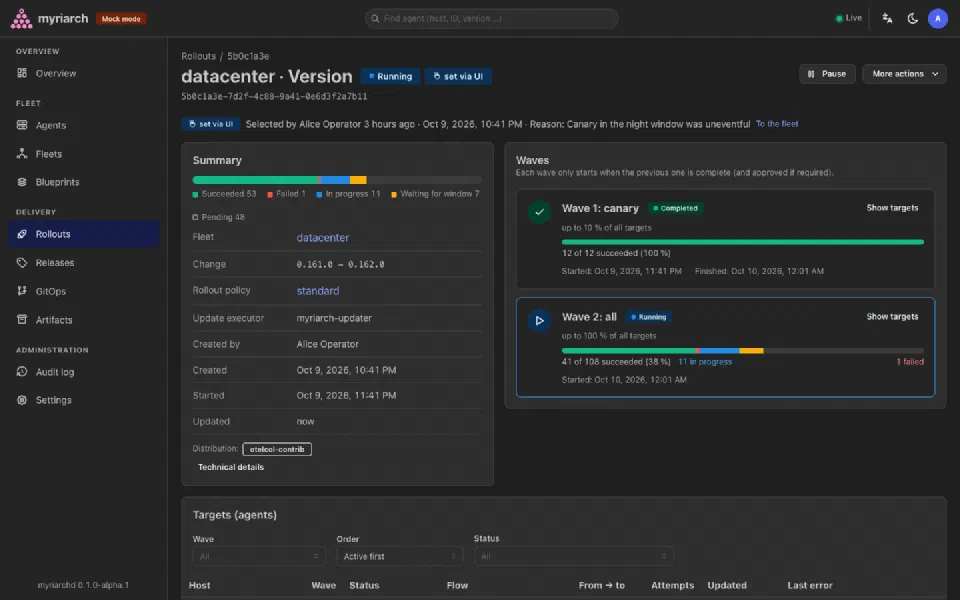
Screenshots of the web UI in its mock mode, with generated sample data.
Try it on your machine
The development mode runs the server with an embedded PostgreSQL, the example GitOps repository and 1,000 simulated collectors. It needs no container runtime.
Open http://localhost:8080 and sign in as admin with the password admin (operator and viewer work the same way). The first start downloads the PostgreSQL binaries once, about 30 MB.
Development mode uses well-known logins and tokens. It is never a production setup.
git clone https://github.com/myriarch/myriarch && cd myriarch
make web-build   # once: build the web UI
ulimit -n 65536  # macOS only: the default of 256 open files is too low
make dev         # server on http://localhost:8080
# second terminal (macOS: ulimit -n 65536 first):
make sim         # 1,000 simulated collectors
Project and community
Myriarch is developed in the open. The roadmap and the decision records explain where it goes and why.